Our Routine
A gentle, flexible day built around every child.
At Special Steps, our daily routine is carefully planned but never rigid. We understand that children have different sensory, communication and emotional needs, and that these can change throughout the day.
We use familiar songs, visual supports, objects of reference and predictable routines to help children understand what is happening next. At the same time, our practitioners respond to each child's individual needs, interests and readiness to learn.
Below is an example of what a typical day may include. No two days are exactly the same, because no two children are the same.
Starting the Day the Sensory Way
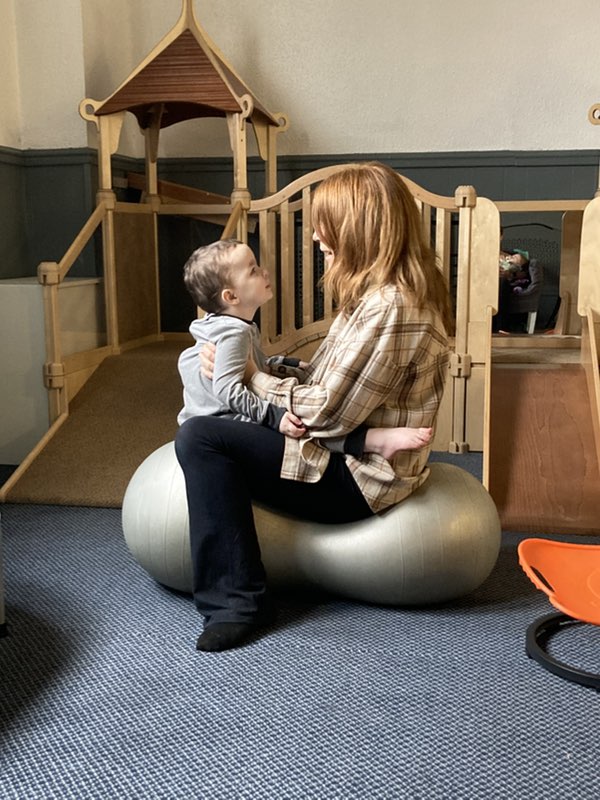
We begin our mornings by helping children feel settled, regulated and ready to engage with their environment. Sensory movement activities provide opportunities for children to develop body awareness, confidence and emotional regulation.
Our sensory start may include:
- Dancing to our familiar Wake Up song
- Stop and Go movement games
- Deep pressure activities where appropriate
- Massage and movement play
Activities are adapted to each child's sensory preferences, physical abilities and individual needs.
Breakfast and Morning Routines
We use familiar songs and consistent routines to make mealtimes predictable and meaningful.
Breakfast is introduced through our song of reference, sung to the tune of If You're Happy and You Know It:
"If you're ready for your breakfast, clap your hands..."
Children are supported to wash their hands using our portable sink, accompanied by our familiar handwashing song, sung to the tune of Here We Go Round the Mulberry Bush.
At the table, children use symbols, objects and other communication approaches to make choices about their food. These everyday opportunities encourage communication, independence and participation.
Hello Song and Emotional Check-In
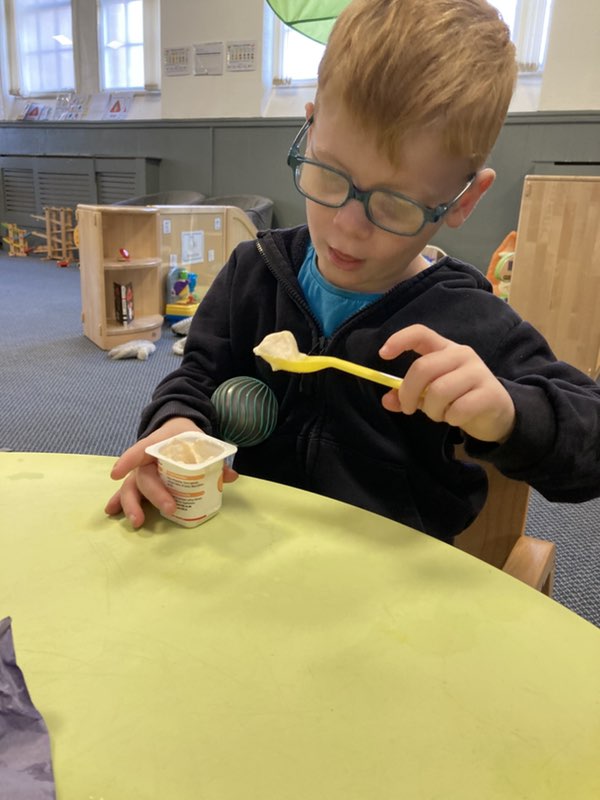
After breakfast, we come together for our Hello Song. This provides a familiar opportunity for children to recognise themselves, connect with others and begin exploring emotions.
"Hello [name], hello [name], hello [name], how are you today?"
During the song, children are encouraged to look at themselves in a mirror. We introduce an emotions board and support children to begin connecting facial expressions with feelings and symbols.
Children participate in ways that are meaningful to them, whether through looking, pointing, signing, vocalising or other forms of communication.
Song Time and Communication
Music is an important part of our daily routine. Our song sessions support communication, shared attention, anticipation and social interaction in a fun and meaningful way.
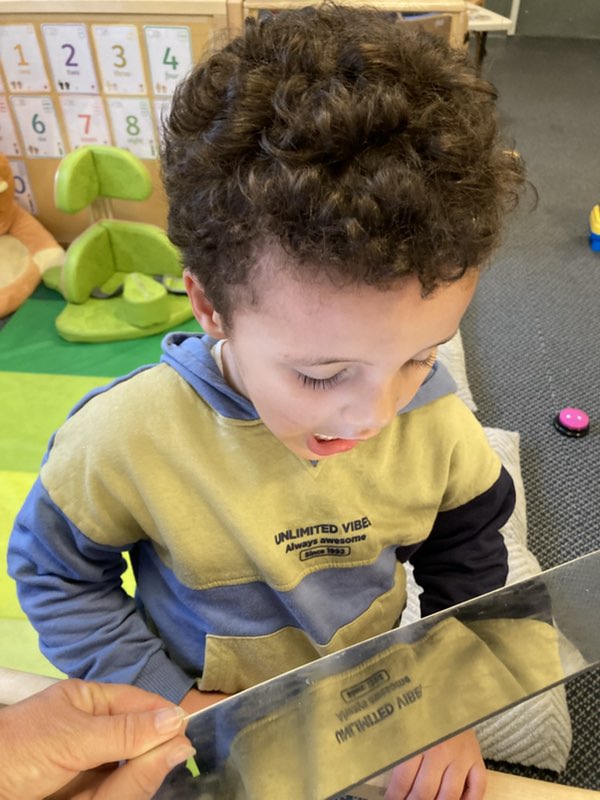
Children are encouraged to choose songs using their preferred communication method.
- Objects and props representing familiar songs
- Symbol strips to support choice-making
- Signs, gestures and spoken language
- Movement and sensory experiences
By giving children meaningful choices, we encourage participation, independence and confidence in communicating their preferences.
Lunchtime
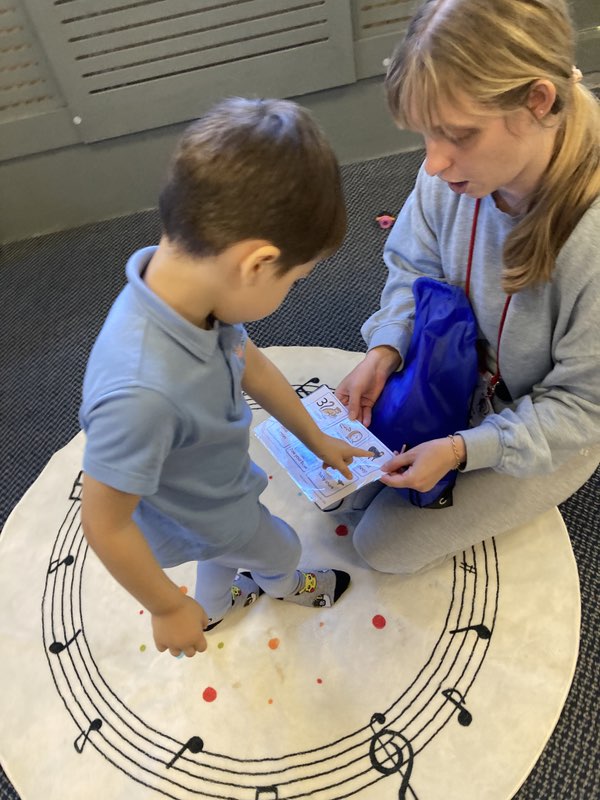
Lunchtime follows the same familiar structure as breakfast, helping children feel secure through consistency and repetition.
We introduce lunch with our familiar song of reference:
"If you're ready for your lunch, clap your hands..."
Our handwashing song is repeated, and children are supported to communicate their needs and preferences throughout the meal.
Mealtimes are calm and responsive, with individual support and adaptations provided where needed.
Good Afternoon Song
Our afternoon greeting builds on the familiarity of our morning Hello Song.
"Good afternoon [name], good afternoon [name], good afternoon [name], where are you today?"
Children are supported to:
- Recognise themselves in a mirror
- Identify their own photograph from a choice
- Begin recognising their own name where appropriate
- Develop self-awareness and a sense of identity
These small, repeated learning opportunities help build familiarity, confidence and early understanding.
Word Well
Word Well is our core-word communication approach, designed to support children's understanding and expression through repetition, modelling and meaningful experiences.
We introduce and revisit core words through familiar songs, symbols, signs, communication switches, sensory activities and everyday interactions.
Children are encouraged to engage with each word in ways that suit their individual communication abilities and developmental stages.
You can also learn more about our communication approach on our Curriculum and Approach page.
Sensory Circuits
Sensory circuits provide structured movement opportunities to support body awareness, motor development and sensory regulation.
Activities may include:
- Crawling and climbing
- Running and jumping
- Balance beams and stepping activities
- Heavy work and resistance activities
- Movement experiences adapted to individual needs
Our practitioners adapt each activity to ensure children can participate safely and meaningfully, including children with additional physical or sensory needs.
Daily Sensory Play
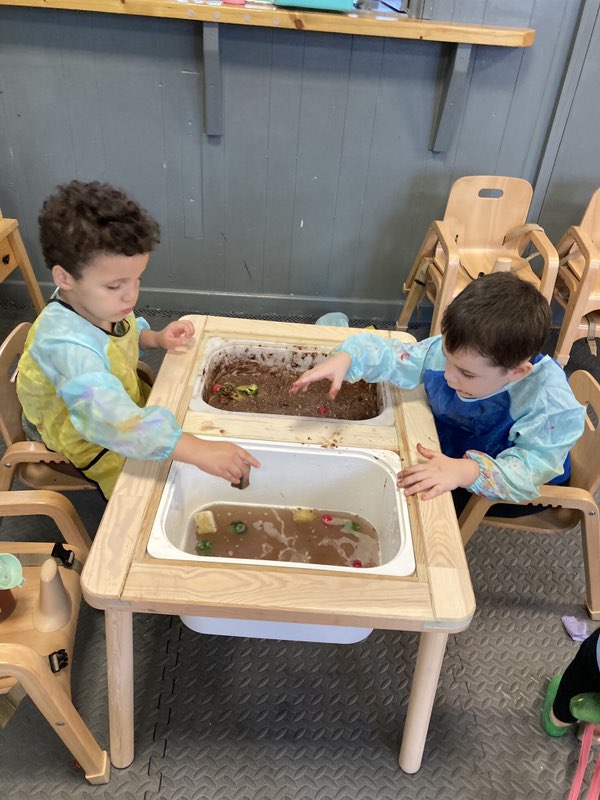
Sensory exploration is woven throughout our daily routine. Children have opportunities to explore different textures, materials and experiences through child-led and adult-supported play.
Our sensory activities are often linked to the weekly theme, providing opportunities to develop curiosity, communication, fine motor skills and confidence.
We use taste-safe sensory bases, carefully selected and adapted to individual children's needs, allergies and developmental stages.
Eating as Learning
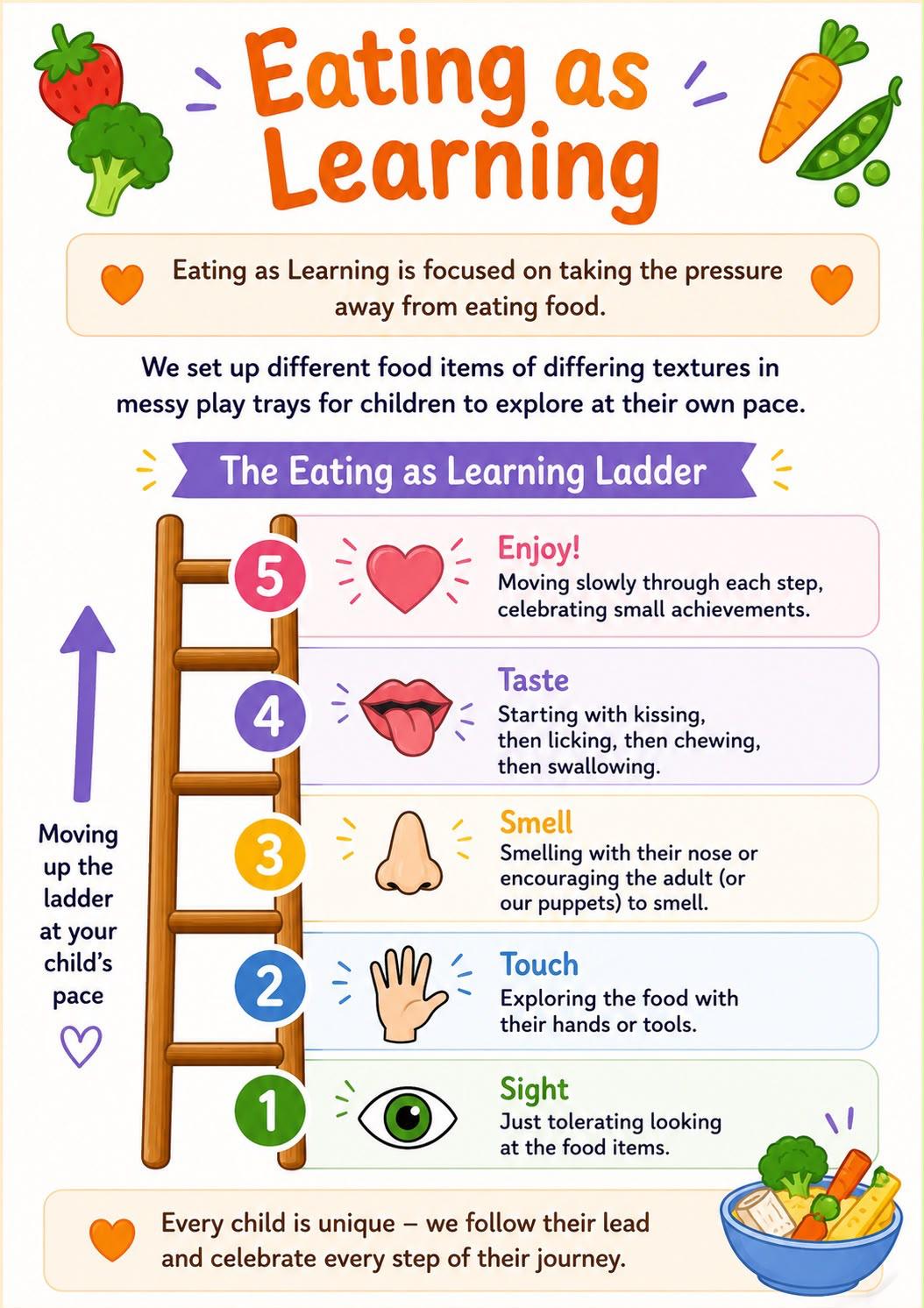
Our Eating as Learning approach supports children who experience sensory differences, restricted diets or difficulties exploring unfamiliar foods.
Rather than placing pressure on children to eat, we create positive, supportive opportunities for them to become familiar with different foods at their own pace.
Children may be supported to:
- Become comfortable seeing unfamiliar foods
- Explore foods through touch and smell
- Interact with different textures
- Build confidence around mealtimes
- Taste new foods when they feel ready
We celebrate every step of progress, recognising that looking at, touching or smelling a food can be a meaningful achievement.
Every Day Is Different
Although our routines provide consistency and predictability, we recognise that every child has their own pace, interests and needs.
Some children may need additional movement, quiet time, sensory support or individual learning opportunities throughout the day. Our practitioners respond flexibly to ensure every child feels safe, understood and included.
At Special Steps, our routine supports the child, rather than expecting the child to fit the routine.